Earlier in the week my family visited the Seamus Heaney HomePlace in Northern Ireland on the recommendation of a couple of people I visited in Dublin. I knew nothing about the Nobel-winning, Irish poet, but I was assured the cafe was worth the visit in any case. It was!
I also wandered though the library which had several examples of Heaney’s poetry including “Digging”:
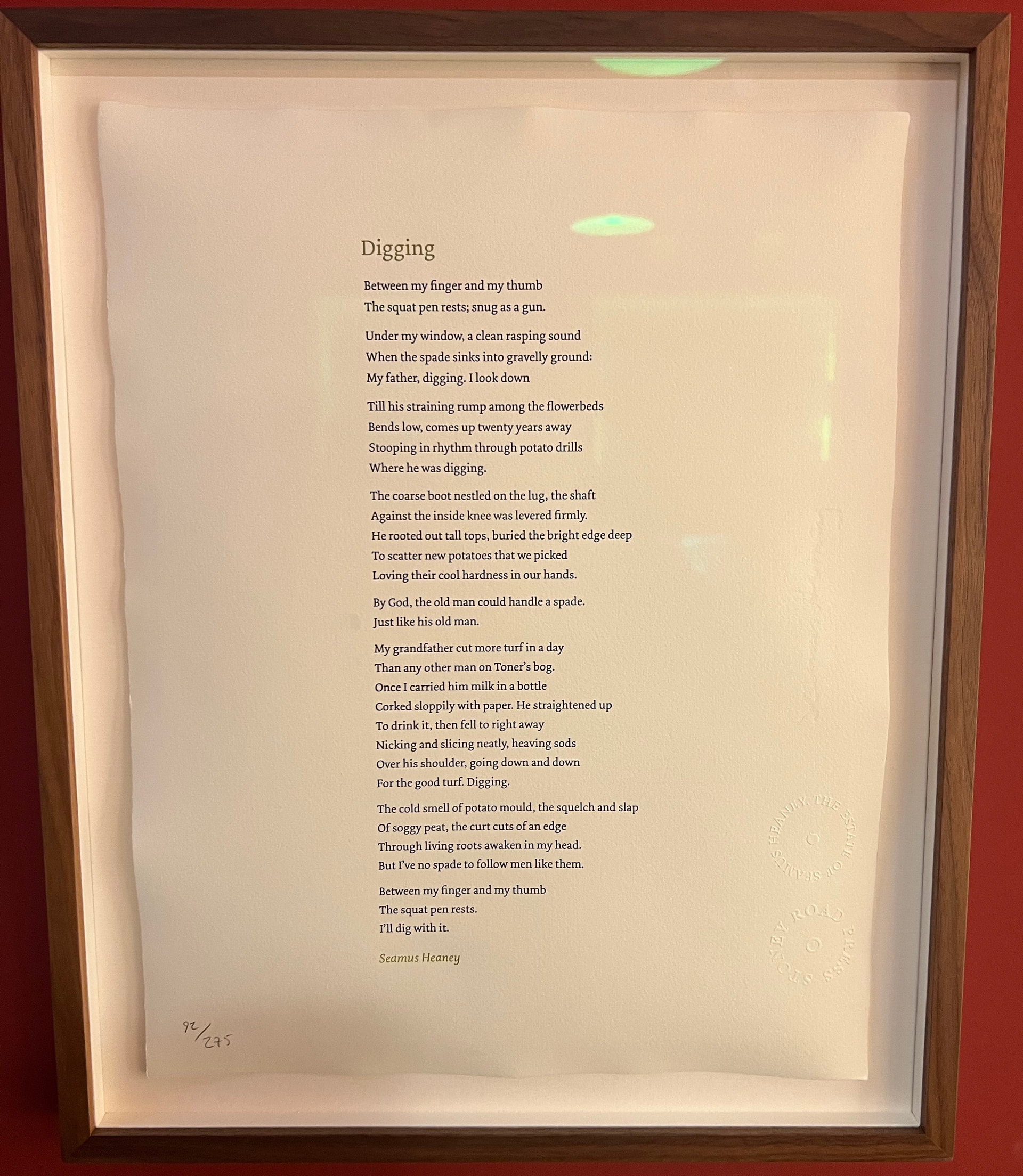
If you want to hear the poem in the author’s voice, there is a clip on YouTube:
Later in the day we visited the Beaghmore stone circles, which were discovered by peat diggers. Most of the stones seem on the small side, but the straight lines coming out of the circles (called alignments) include several larger stones. Discovering the stones would not have been difficult, but understanding that these are not natural features would have required interpretation. I like to imagine the slow realization that must have come to the peat diggers as they dug row after row turning up stone after stone. If the Neolithic makers of the circles had failed to gather larger stones, would the site have gone unnoticed?
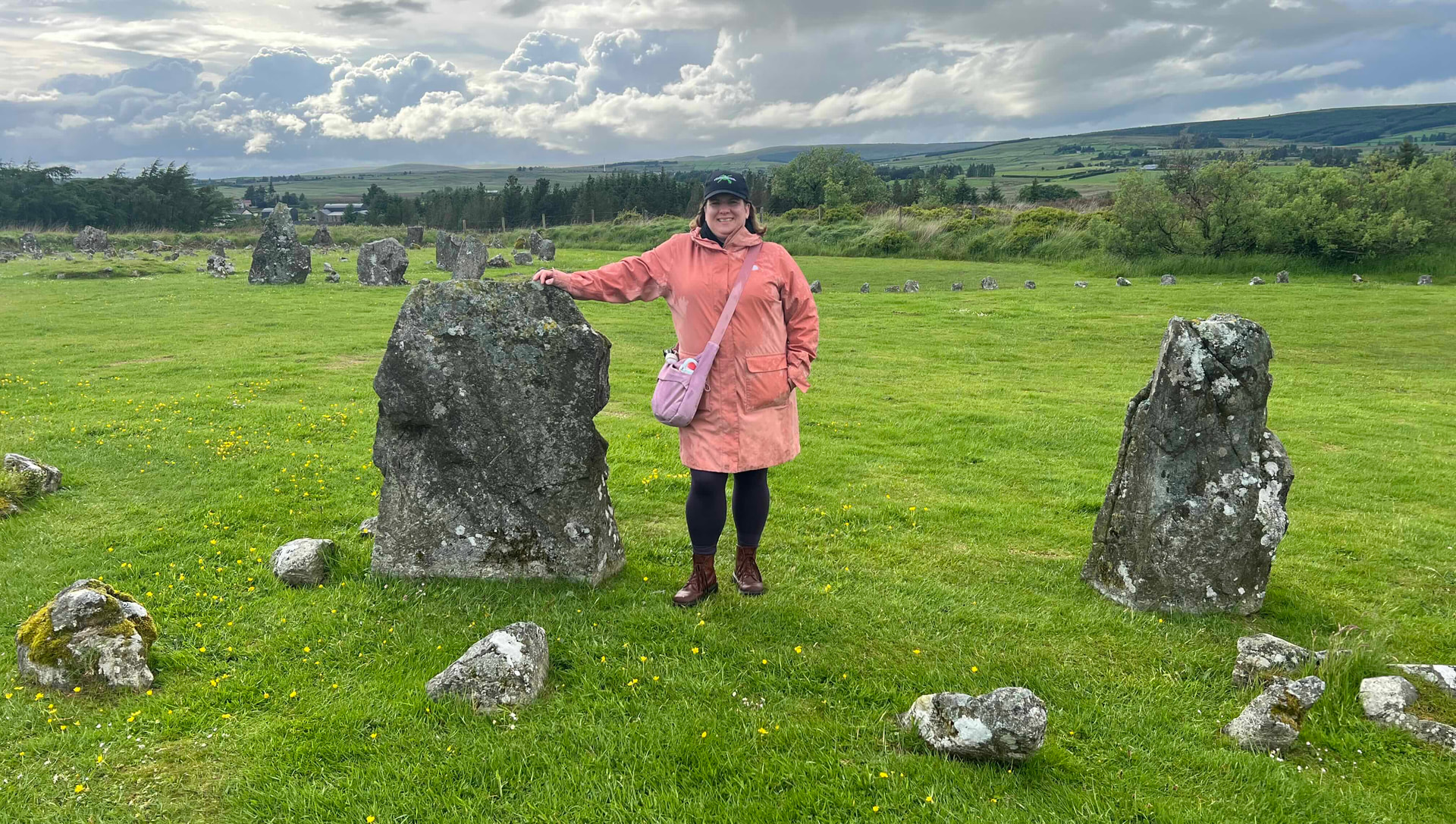
It wasn’t until I started writing about Seamus Heaney’s poem that I noticed the connection with the stone circles we saw later in the day. A man like his grandfather must have struck the first tall stone and worked around it. Only by digging more would that man have discovered the work of other men who carefully arranged tons of stones into elaborate formations. Writing forces the writer to dig in more. Where was Toner’s Bog? How old were the circles? How deep did peat harvesters dig?
Many of the answer to these questions would have no meaning or ambiguous meaning. But sometime questions reveal a missing piece to the puzzle that could only be discovered by digging.